
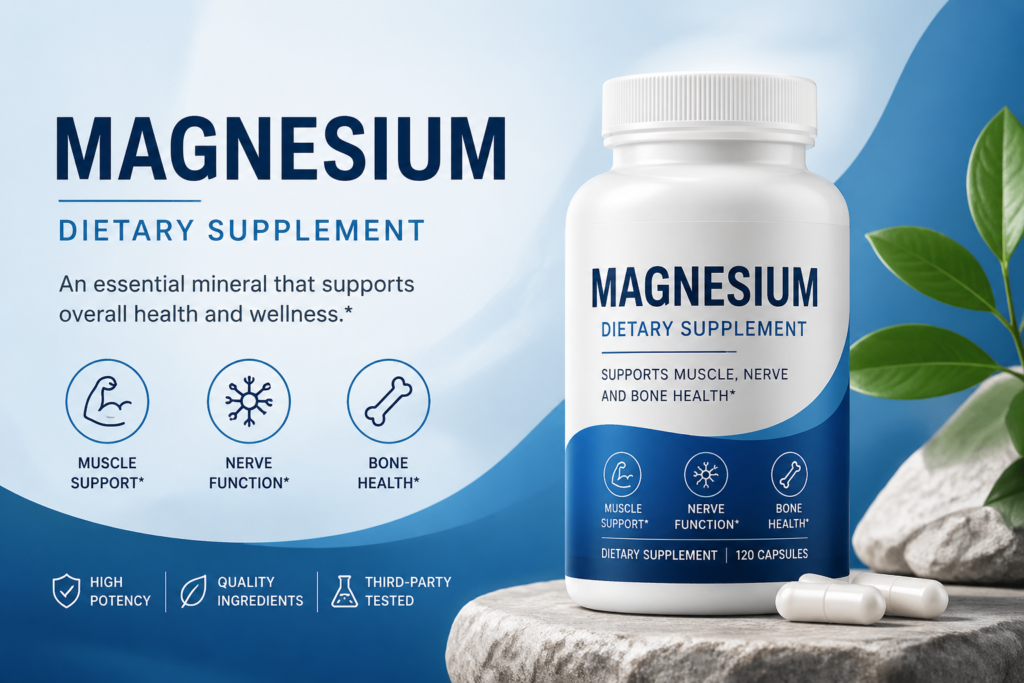
If you have been feeling unusually tired, struggling to fall asleep, or dealing with muscle cramps that seem to come out of nowhere, there is a good chance your body is low on magnesium. A magnesium dietary supplement might be one of the simplest, most overlooked solutions sitting right in front of you. Magnesium is involved in over 300 biochemical reactions in the human body, and yet studies consistently show that a large portion of adults do not get nearly enough of it from food alone.
This article walks you through everything you genuinely need to know about magnesium — what it does, why so many people are deficient, how it supports sleep and energy, and how to choose the right supplement for your needs.
What Is Magnesium and Why Does Your Body Need It?
Magnesium is a mineral that your body cannot produce on its own, which means it must come entirely from the food you eat or from a magnesium dietary supplement. It is the fourth most abundant mineral in the body and plays a central role in processes that affect almost every organ system — from your heart and muscles to your nervous system and bones.
It helps regulate blood pressure, keeps blood sugar levels stable, supports protein synthesis, and plays a key role in converting food into energy. In short, without enough magnesium, your body simply cannot run the way it is designed to. The problem is that modern diets, heavy in processed foods and low in leafy greens, nuts, and seeds, have made magnesium deficiency incredibly common.
Signs You Might Be Low on Magnesium
Magnesium deficiency often goes undiagnosed because the symptoms can mimic other conditions or are simply brushed off as stress or aging. However, there are several tell-tale signs worth paying attention to.
Common Signs of Magnesium Deficiency
- Persistent fatigue and low energy throughout the day
- Difficulty falling asleep or staying asleep at night
- Muscle cramps, twitches, or spasms — especially in the legs
- Increased anxiety, irritability, or low mood
- Frequent headaches or migraines
- High blood pressure that is hard to manage
- Irregular heartbeat or heart palpitations
- Constipation or irregular digestion
If you are experiencing several of these together, speaking to your doctor and considering a magnesium dietary supplement may be a worthwhile step. Blood tests can confirm whether your magnesium levels are within a healthy range.
How a Magnesium Dietary Supplement Supports Better Sleep
One of the most well-documented benefits of taking a magnesium dietary supplement is improved sleep quality. Magnesium plays a direct role in regulating the nervous system and activating the parasympathetic nervous system — the part of your body responsible for calming you down and preparing you for rest.
It also influences the production of melatonin, the hormone that controls your sleep-wake cycle. Without adequate magnesium, melatonin production can become irregular, making it harder to fall asleep at a consistent time. On top of that, magnesium binds to GABA receptors in the brain — GABA being the neurotransmitter responsible for quieting neural activity — which is why taking magnesium before bed often leads to a noticeably more relaxed state of mind.
Several clinical studies have found that older adults with insomnia who supplemented with magnesium reported falling asleep faster, sleeping longer, and waking up feeling more refreshed. Many people who add a magnesium supplement to their evening routine notice the difference within just a few weeks.
Magnesium and Energy: The Connection Most People Miss
When people think about energy supplements, they usually reach for caffeine or B vitamins. But magnesium deserves a place in that conversation too. Every single cell in your body requires magnesium to produce adenosine triphosphate — ATP — which is essentially the molecule your cells use as fuel.
Without magnesium, your mitochondria cannot efficiently convert the food you eat into usable energy. This is why people who are magnesium-deficient often describe a persistent, heavy kind of fatigue that does not go away even after a full night of sleep. It is not just tiredness — it is the body running on low fuel.
For people who exercise regularly, magnesium is especially important. It supports muscle contraction and recovery, reduces lactic acid build-up, and helps maintain electrolyte balance. Athletes and people with physically demanding lifestyles tend to lose more magnesium through sweat, making supplementation particularly beneficial.
Other Key Health Benefits of Magnesium Supplementation
Beyond sleep and energy, a magnesium dietary supplement offers a surprisingly broad range of health benefits that researchers continue to study.
Heart health: Magnesium helps regulate heart rhythm and relax blood vessels, which contributes to healthy blood pressure. Several studies have linked higher magnesium intake with a reduced risk of cardiovascular disease and stroke.
Blood sugar and diabetes management: Magnesium plays a role in insulin sensitivity. People with type 2 diabetes are more likely to have low magnesium levels, and some research suggests that supplementing may improve insulin function and blood sugar control.
Bone strength: About 60% of your body’s magnesium is stored in your bones. It works alongside calcium and vitamin D to maintain bone density, making it an important mineral for reducing the risk of osteoporosis as you age.
Anxiety and mood: Magnesium has a calming effect on the nervous system. People dealing with chronic stress, anxiety, or low mood often find that their symptoms ease somewhat after consistent magnesium supplementation — a benefit that is easy to underestimate.
Types of Magnesium Supplements: Which One Is Right for You?
Not all magnesium dietary supplements are the same. The form of magnesium used in a supplement determines how well your body absorbs it and what it is most effective for. Here is a simple breakdown of the most common types.
Highly absorbable and gentle on the stomach. Ideal for people dealing with sleep problems, stress, or anxiety.
Well absorbed and commonly used. Has a mild laxative effect, making it useful for people with constipation.
Often recommended for fatigue and fibromyalgia. Supports energy production at the cellular level.
Crosses the blood-brain barrier more effectively. Shows promise for memory and cognitive function.
Low cost but also lower bioavailability. Less ideal for raising magnesium levels but used in some digestive formulas.
Combined with taurine, this form is particularly associated with cardiovascular benefits and blood pressure support.
How Much Magnesium Should You Take?
The recommended daily allowance for magnesium is around 400 to 420 mg per day for adult men and 310 to 320 mg per day for adult women. These needs increase slightly during pregnancy. Most people get some magnesium from food, so a supplement in the range of 150 to 350 mg daily is typically sufficient to fill the gap.
It is best to start with a lower dose and gradually increase it, as high doses of magnesium can cause loose stools or digestive discomfort — particularly with forms like magnesium citrate or oxide. Taking your supplement with food can also help reduce the chance of stomach upset.
While magnesium is generally safe for most adults, people with kidney disease should consult a doctor before supplementing, as impaired kidneys may struggle to excrete excess magnesium. Magnesium can also interact with certain medications, including antibiotics and diuretics, so it is always wise to check with a healthcare provider if you are on any prescription drugs.
Who Benefits Most from a Magnesium Dietary Supplement?
While magnesium is beneficial for nearly everyone, some groups of people are at higher risk of deficiency and may see the most noticeable results from supplementation. Older adults tend to absorb magnesium less efficiently and often eat less. People with type 2 diabetes or gastrointestinal disorders like Crohn’s disease may lose or absorb less magnesium. Those who drink alcohol heavily, take proton pump inhibitors, or follow diets very low in whole foods are also more vulnerable.
Athletes, people under chronic stress, and women experiencing PMS symptoms are other groups who frequently report meaningful improvements after starting a magnesium dietary supplement.
Food Sources vs. Supplementation: Should You Do Both?
Ideally, a good portion of your magnesium should come from food. Dark leafy greens like spinach, nuts and seeds (particularly pumpkin seeds and almonds), legumes, whole grains, dark chocolate, and avocados are all excellent natural sources. However, many people find it genuinely difficult to hit the recommended daily amount through diet alone, especially with busy lifestyles.
A magnesium dietary supplement is not a replacement for a balanced diet — it is a complement to it. Think of it as filling in the gaps rather than starting from scratch. Pairing food-based magnesium with a well-chosen supplement gives your body the best chance of maintaining consistently healthy levels.
Magnesium is not a trendy superfood or an overhyped quick fix. It is a mineral that your body has always needed and one that many people are quietly running low on. A quality magnesium dietary supplement — chosen thoughtfully and taken consistently — can genuinely shift how you sleep, how you feel during the day, and how well your body holds up over time. Sometimes the most powerful health changes are also the most straightforward ones.